

Climbing Everest in One Week: The Future of Mountaineering or an Ethical Dilemma?
Nowadays Mountaineering is very popular and a lot of people want to get there name in the Pilgrim of every Mountaineer out there Mt. Everest .For decades now, Mount Everest-the highest in the world-is a steady presence of humanness, fortitude, and feats of human power that are irrepressible. Climbers marshal all their strength in preparation for months prior to a very grueling ascent, terrible weather conditions, and mortal threats while one stands atop what many have called "The Roof of the World". But Climbing Everest in one week doesn't sound too possible, or does it ? Following Alan Arnette's blog about the use of advanced technology, including Xenon gas, in climbing Everest in a week, this blog further investigates the feasibility and ethics of such an expedition.
Is this the future of mountaineering, or does it pose an ethical dilemma that might reshape the climbing world as we know it?
The Regular Climb to Mount Everest
It is Important to know what regular climb is like before the 1 week climb so here it is (if you know about regular climb feel free to skip this portion). Mount Everest, the world's highest peak at 8,848 meters (29,029 feet), has captivated adventurers for over a century. From the first person to climb Mount Everest to modern-day expeditions, the mountain remains the ultimate challenge for climbers. In this SEO-optimized guide, we explore Everest's history, key statistics, and answer burning questions like how long does it take to climb Mount Everest, how much does it cost to climb Mount Everest, and how many people have climbed Mount Everest.
The First Person to Climb Mount Everest
The historic first successful ascent of Everest took place on May 29, 1953, when Sir Edmund Hillary (New Zealand) and Tenzing Norgay (Nepal) reached the summit via the Southeast Ridge. This monumental achievement marked the beginning of Everest’s climbing legacy.
Before this, numerous expeditions had attempted the climb, including George Mallory and Andrew Irvine in 1924, who disappeared near the summit—sparking debates over whether they reached the top before perishing.
How Many People Have Climbed Mount Everest?
Since Hillary and Norgay’s first ascent, over 6,000 different individuals have successfully climbed Everest, with more than 11,000 total summits (some climbers have reached the top multiple times). The number grows each year, with hundreds of climbers summiting annually.
However, Everest is also deadly—over 300 people have died attempting the climb, with some bodies remaining on the mountain. The death rate is around 1% for those who attempt the summit, making it one of the most dangerous climbs in the world.
How Long Does It Take to Climb Mount Everest?
Climbing Everest is not a quick feat—it requires two months (60-70 days) on average due to:
- Acclimatization: Climbers spend weeks adjusting to high altitudes to avoid deadly conditions like HAPE (High Altitude Pulmonary Edema) and HACE (High Altitude Cerebral Edema).
- Weather windows: The best time to summit is during mid-May, when winds are calmest. Teams wait at Base Camp for the perfect conditions.
- Multiple rotations: Climbers ascend and descend between camps (Base Camp, Camp 1, Camp 2, Camp 3, Camp 4) to build endurance before the final push.
The summit push itself takes about 7-10 days from Base Camp, with the final ascent to the top lasting 12-20 hours in a single grueling push.
How Much Does It Cost to Climb Mount Everest?
Climbing Everest is one of the most expensive adventures in the world, with costs ranging from 30,000to30,000to130,000+, depending on the expedition type:
- Guided climbs (most common): 45,000−70,000$ (includes permits, Sherpa support, oxygen, food, and logistics).
- Budget climbs: 30,000$−40,000$ (fewer luxuries, higher risks).
- Luxury expeditions: $100,000+ (private guides, premium gear, high-end Base Camp amenities).
The Positives of being able to climb Everest in one week
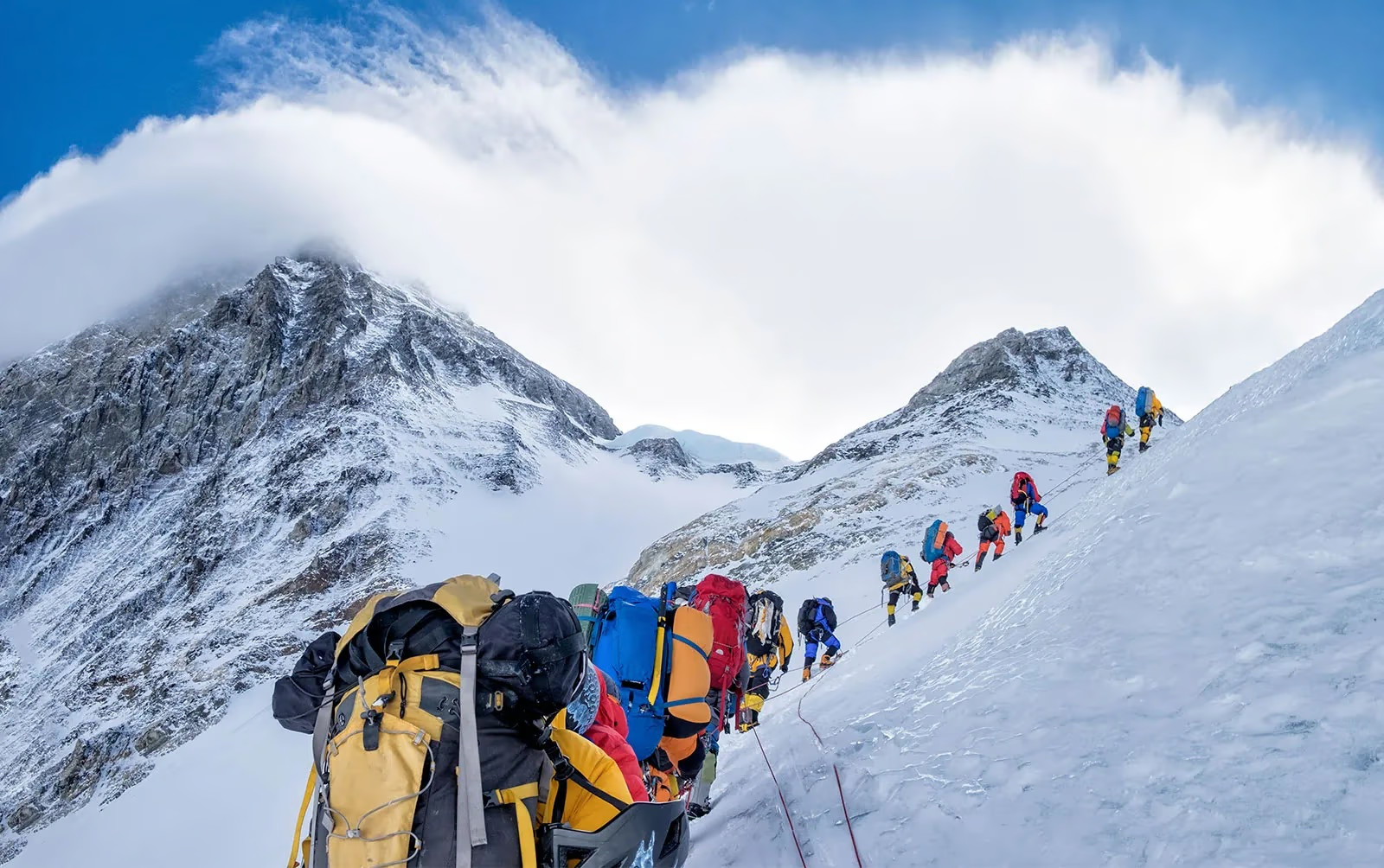
The Role of Xenon Gas in Climbing
One of the most intriguing technological advancements enabling the possibility of climbing Everest in one week is Xenon gas. This hypothetical oxygen supplement is designed to enhance acclimatization, allowing climbers to adapt to high altitudes more quickly and safely. Here’s how it could revolutionize mountaineering:

How does this Xenon Gas work in Climbing ?
- Enhanced Oxygen Absorption: Xenon gas is theorized to improve the body’s ability to absorb the oxygen at high altitudes, reducing the risk of altitude sickness.As there is less oxygen in higher altitude with the use of Xenon gas the person can adapt to high altitude in very short and drastic time .
- Faster Acclimatization: By speeding up the acclimatization process, climbers could spend less time at base camps and intermediate stops, significantly shortening the overall climb duration.
- Reduced Physical Strain: With better oxygen utilization, climbers may experience less fatigue, enabling them to push harder and faster during the ascent.
What might be the benefit of Xenon Gas in climbing?
- Time Efficiency: Climbers with limited time could achieve their goal of summiting Everest without taking months off work or other commitments.
- Safety Improvements: Faster acclimatization could reduce the risk of altitude-related illnesses, such as High Altitude Pulmonary Edema (HAPE) and High Altitude Cerebral Edema (HACE).
- Economic Impact: Expeditions could become more cost-effective, as fewer resources would be needed for prolonged stays on the mountain.
Ethical and Practical Concerns about climbing Everest in one week
- Safety Risks: Relying on untested technology could lead to unforeseen complications, putting climbers at risk.
- Accessibility: If Xeon gas becomes a reality, it could create a divide between climbers who can afford this technology and those who cannot.
- Environmental Impact: Increased traffic on Everest due to faster climbs could exacerbate existing environmental issues, such as littering and waste accumulation.
Questions on Ethics: Speed vs Respect
The concept of climbing Everest in a week raises significant ethical questions. Is it respectful to the mountain, the Sherpa community, and the environment? Everest is not just a mountain; it’s a sacred symbol for the Sherpa community and a fragile ecosystem. Rapid climbs could exacerbate environmental issues, such as littering and waste accumulation, as climbers prioritize speed over sustainability. The mountain’s already strained resources would face even greater pressure.
Overcrowding is another concern. The allure of a one-week climb could attract more climbers, leading to overcrowding on the routes. This not only increases the risk of accidents but also diminishes the sense of solitude and achievement that mountaineering traditionally offers. The commercialization of Everest could further erode its mystique, turning it into a "bucket-list" item rather than a lifelong dream.
The impact on the Sherpa community cannot be overlooked. Sherpas are the backbone of Everest expeditions, providing essential support and expertise. Faster climbs could place additional demands on them, leading to overwork and exploitation. While the economic benefits are undeniable, the human cost must be carefully considered. Are we prioritizing convenience over the well-being of the people who make these climbs possible?
Conclusion: For one week climb to Everest
Climbing Everest in one week is a tantalizing prospect, made possible by technological advancements and human ingenuity. However, it also raises significant ethical and practical concerns. From the environmental impact to the well-being of the Sherpa community, the implications of such expeditions are far-reaching. As we navigate this new era of mountaineering, we must ask ourselves: Are we climbing faster, or are we losing sight of what makes Everest—and mountaineering itself—so special? The answer lies in our ability to balance progress with responsibility, ensuring that the legacy of Everest endures for generations to come.
Treks in Everest Region offered by Nepal Tour and Trek
Everest Base Camp Trek

The classic Everest Base Camp Trek in Everest region, a pilgrimage for mountain lovers. Witness breathtaking views of Everest and surrounding giants, immerse yourself in Sherpa culture, and experience the thrill of reaching the foot of the world's highest peak. A truly rewarding adventure.
Three Pass Trek

Three Pass Trek can be a great in Everest Region. Conquering Kongma La, Cho La, and Renjo La. This high-altitude adventure offers breathtaking panoramic views of Everest, Lhotse, Makalu, and other majestic peaks. Experience Sherpa culture and stunning glacial landscapes on this unforgettable journey.
Read some other blogs from Nepal Tour and Trek
Pikey Peak the PoonHill of Everest

At 4,065m, Pikey Peak (Peaky Peak) offers what many consider the best sunrise view of Everest outside of Everest Base Camp itself. Unlike the crowded Poon Hill trek, Pikey Peak remains relatively undiscovered while offering views of 8 of the world's 14 highest peaks. Here's why it's becoming the top alternative for trekkers in 2025.